Case Study · Service Design

Redesigning UMBC's
Study Abroad Experience

Improving a broken process without touching a single line of code

Role UX Designer & Researcher System Terra Dotta Duration 3 Months
UMBC Study Abroad redesign

A system that wasn't
broken — just ignored.

When I joined UMBC's Study Abroad Office, I noticed something everyone already felt but nobody had acted on: the process was confusing for students and exhausting for staff. Not because the technology was missing — but because nobody had ever sat down and designed how it should actually work.

My Role

  • Initiated and led the project independently — this wasn't assigned, it was identified.
  • Conducted staff interviews and distributed student surveys to map the pain points.
  • Restructured the student application flow and consolidated redundant data fields.
  • Migrated the team to the new Admin Console and automated previously manual reporting.
  • Designed and built a standalone Study Abroad website using Terra Dotta's Site Builder.

The constraint

Everything had to live inside Terra Dotta — a legacy SaaS system used by hundreds of universities.

No custom user flows No custom UI design No structural changes

This became my first real taste of UX in the wild: messy systems, tight constraints, and real people counting on the outcome. The challenge wasn't building something new — it was making what already existed finally work.

Two sides of
the same broken system.

I needed to understand the problem from both ends before touching anything. I interviewed staff directly and distributed surveys to 200+ students. Only 10 responded — but those 10 responses perfectly mirrored what staff had already told me. That wasn't a research failure. It was triangulation: two completely different groups pointing to the exact same structural breakdown.

200+

Students surveyed

10

Responses — enough to validate staff findings

3+

Terra Dotta views staff juggled daily

Students experienced

Ambiguity at every step

  • Unclear navigation with no obvious next step
  • Confusing instructions led to emails instead of form submissions
  • Duplicate data entry across multiple fields
"I had to input the same information multiple times while filling the application."

Staff experienced

Fragmented data, manual everything

  • Constantly switching between 3+ different Terra Dotta views
  • Sifting through outdated, irrelevant questionnaire fields
  • Manual data exports to Excel for basic reporting tasks
"It takes so long just to find a single student's application status."

The root cause

"The system had never been configured — it had just been used. Nobody had ever designed the workflow. They'd only inherited it."

Designing
inside the box.

The constraint was total: no new tools, no custom UI, no outside systems. Everything had to happen within Terra Dotta's existing configuration options. That forced a kind of discipline — every decision had to be structural, not cosmetic. Two phases, two audiences, one system.

Phase 1 — Student Application Flow

Removed outdated questions, consolidated redundant fields, and reordered steps so the journey felt logical instead of overwhelming. Fewer inputs, clearer labels, no dead ends.

Phase 2 — Staff Admin Console

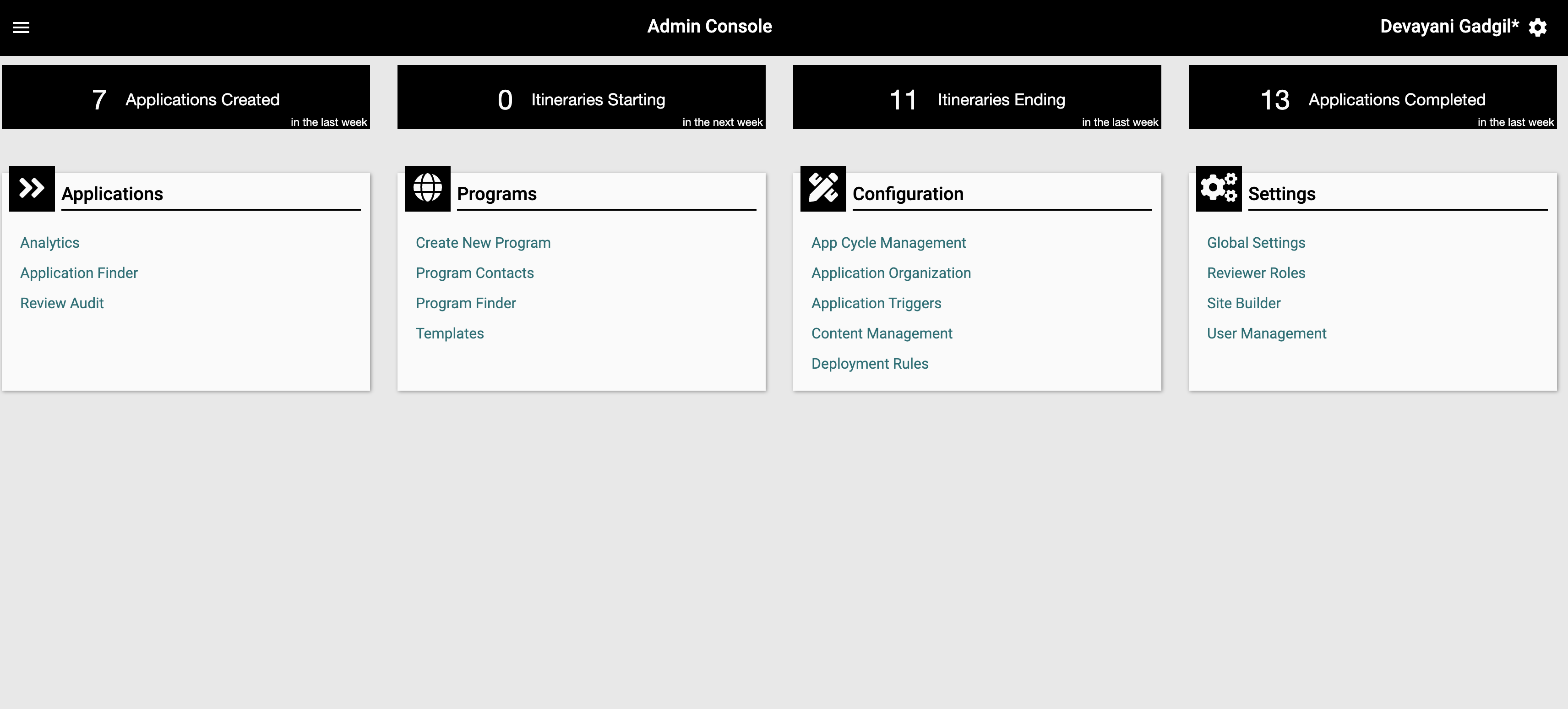
Moved the team fully into Terra Dotta's new Admin Console, restructured materials, and configured automated reporting — replacing hours of manual Excel exports with a single filtered view.

Student Application: Before & After

Scattered multi-form entry consolidated into a single, logical flow.

BEFORE DUP DUP DUP AFTER ✓ Single source Multiple forms, duplicated fields One logical flow, no redundancy

Staff View: Before & After

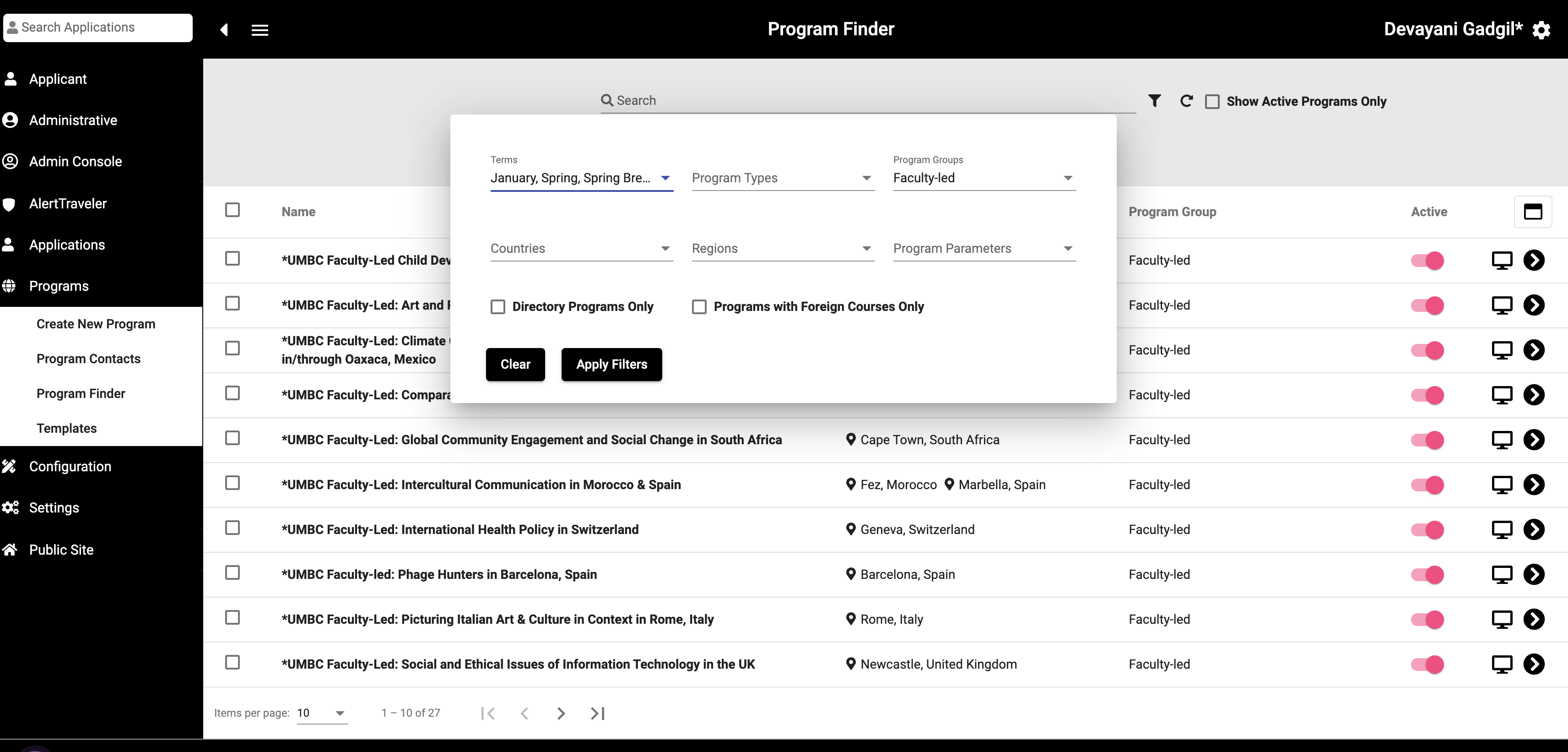
The Classic View was visually overwhelming with no actionable hierarchy. The new Admin Console surfaces what matters — immediate priorities, real-time search, and application status at a glance.
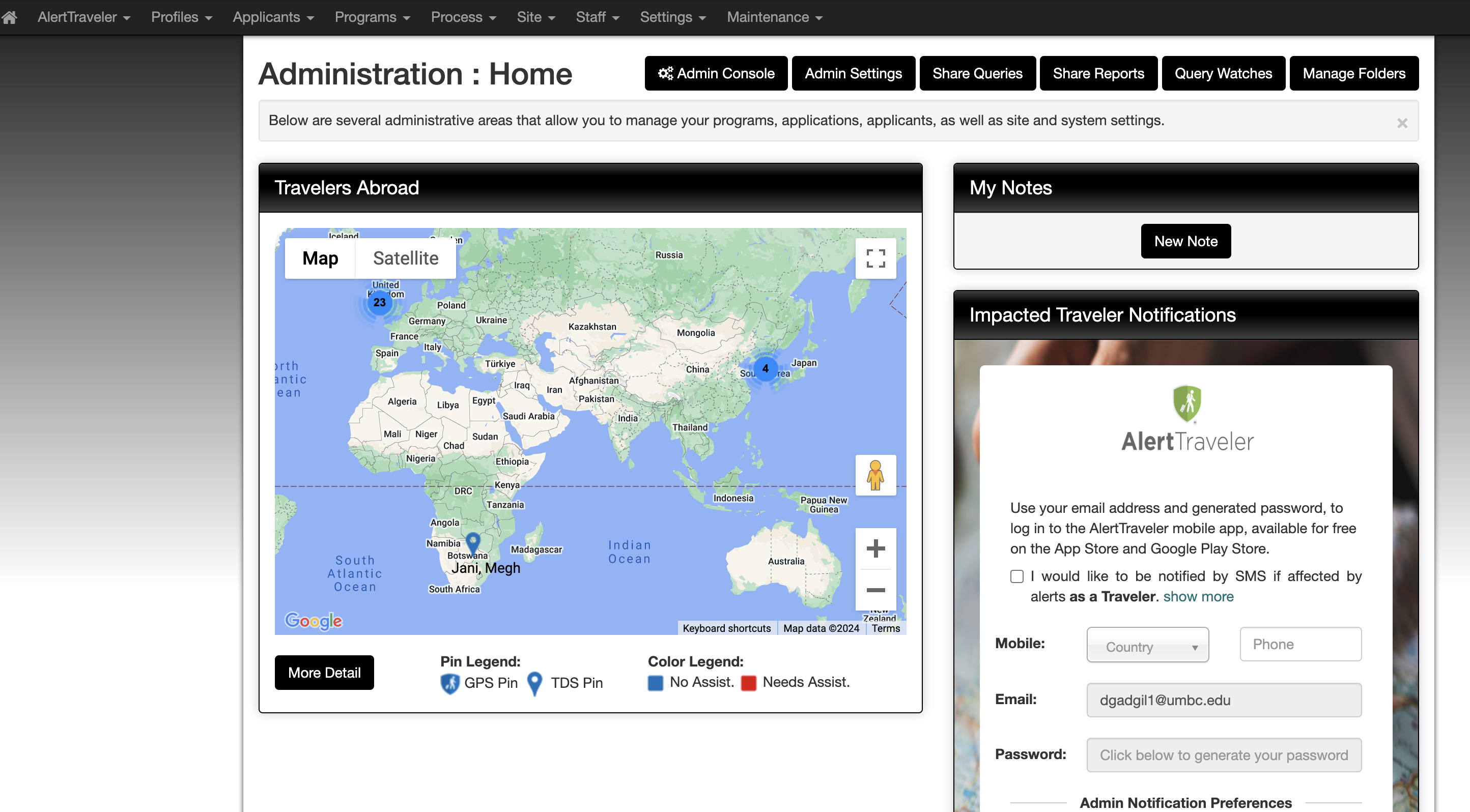
✕ Before — Classic View
Terra Dotta classic view
✓ After — Admin Console
Terra Dotta admin console
✕ Before — Classic View
Terra Dotta classic view 2
✓ After — Admin Console
Terra Dotta admin console 2

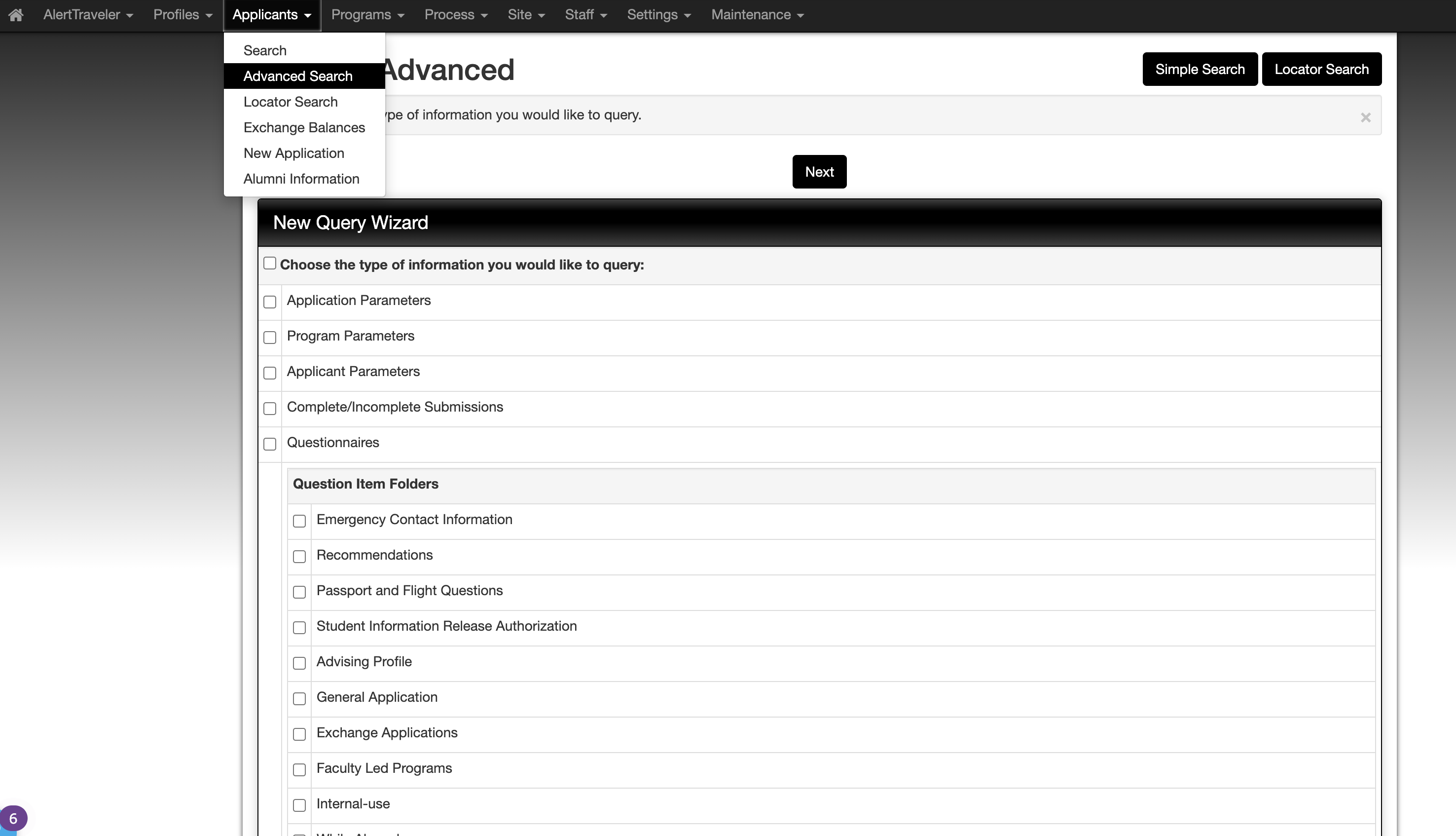
The "Zero Entry" Report

Before this project, generating a list of current applicants required manual parameter setup every single time. By correctly configuring the Applicant Report inside Terra Dotta, staff could generate this view automatically — no setup, no Excel, no waiting. This one configuration change replaced hours of weekly work.
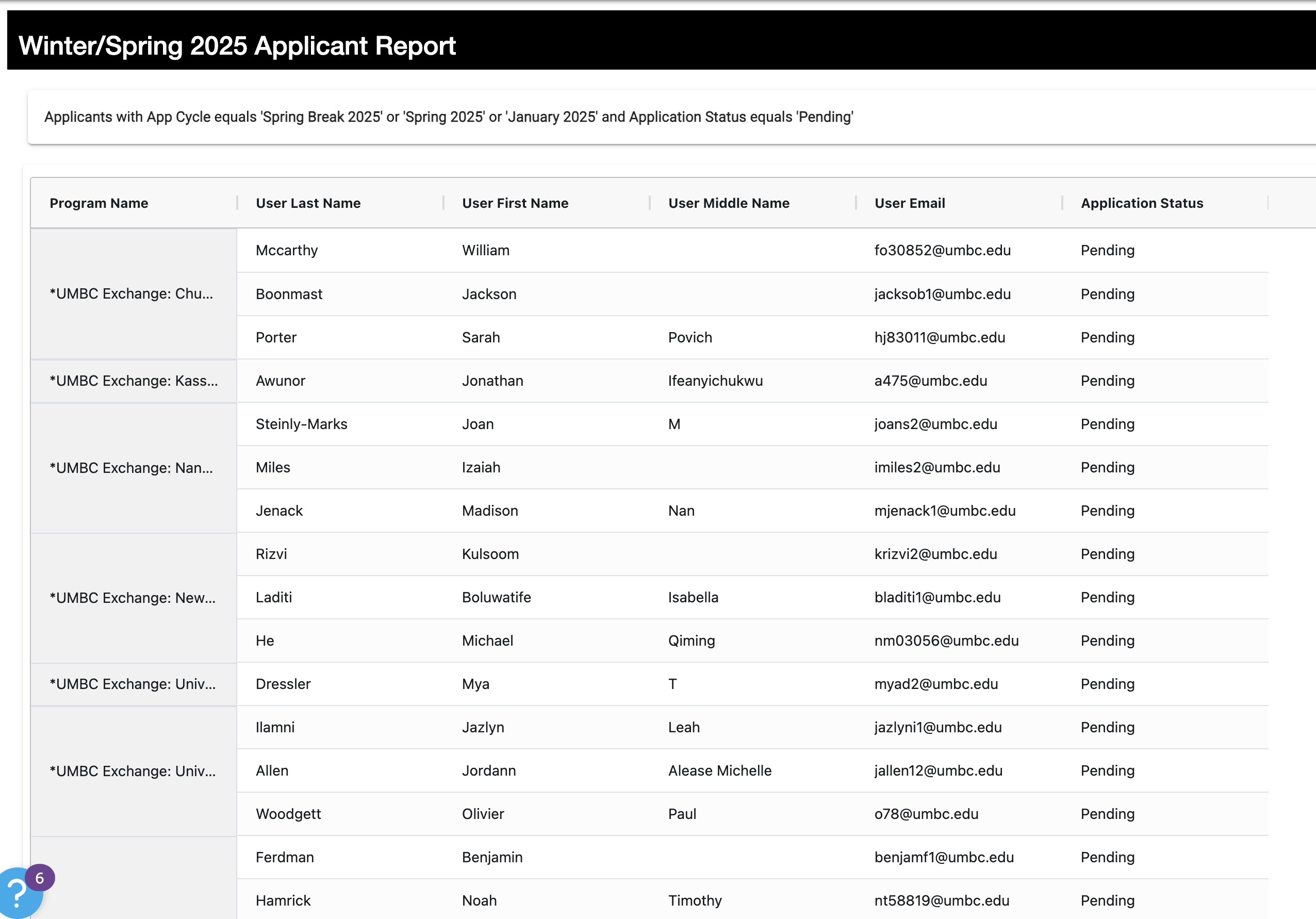
Zero Entry Report

A standalone home
for Study Abroad.

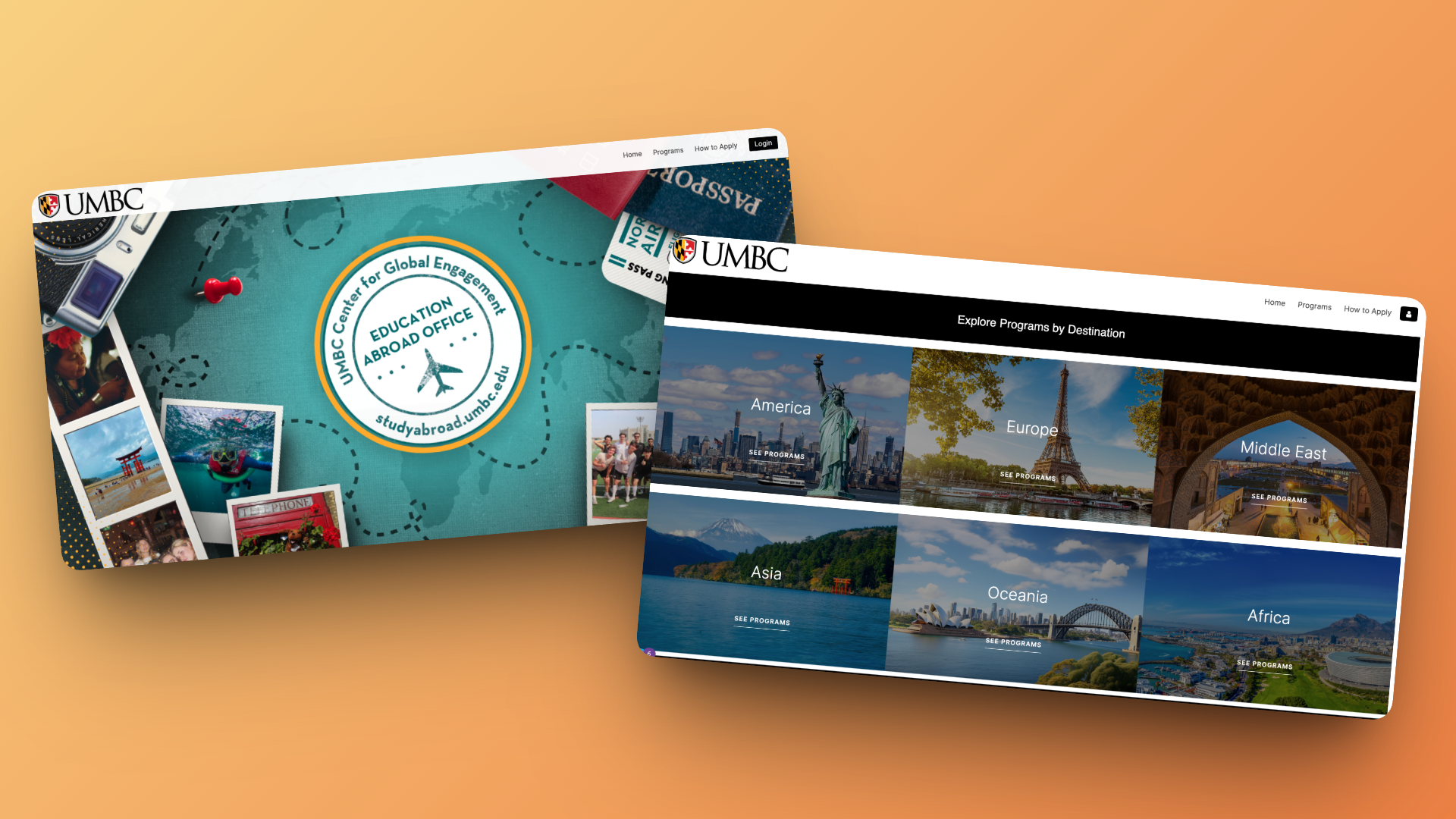
Before this project, all study abroad information lived on a single UMBC webpage — a dense paragraph with a few links. Students had no clear starting point. I designed and built a full standalone website using Terra Dotta's Site Builder, giving the office a proper presence that students could actually navigate.

The site is live at goabroad.umbc.edu — still in use today.

UMBC Study Abroad website

Building this site meant working entirely within Terra Dotta's template constraints — no custom CSS, no component library. The design decisions had to be structural: information architecture, content hierarchy, and navigation clarity over visual customisation.

Real outcomes,
real people.

This project never produced a launch metric or a conversion rate. But the people it affected told a clear story — and in service design, that's often the most honest measure of impact.

Student Experience

Less Confusion, More Confidence

Students reported navigating steps more independently after the restructure. The volume of "what do I do next?" emails to staff dropped noticeably — not because students stopped caring, but because the process finally answered the question before they had to ask.

Staff Efficiency

Everything in One Place

Staff went from juggling 3+ Terra Dotta views to working entirely within the Admin Console. Checking a student's application status — previously a multi-step process — became a single filtered search.

Operational

Reporting Without the Manual Work

The Zero Entry Report configuration eliminated weekly manual data exports. What previously took hours of Excel work became an automated, always-current view that staff could pull instantly.

Lasting Presence

A Website That Still Runs

The standalone Study Abroad website I built is still live and in use today. It gave the office a proper digital home — something that didn't exist at all before this project started.

"The workflow is so much easier to manage now."

Study Abroad Staff

"Students seem less confused. We're getting fewer panic emails."

Study Abroad Staff

"The constraint wasn't the obstacle. It was the design brief."

Most real UX work doesn't start with a blank canvas. It starts with a system someone else built, for reasons nobody remembers, that real people are quietly struggling with every day. This project taught me that impact doesn't require new tools or new screens — it requires the discipline to look closely at what's already there, understand why it's failing, and reorganise it with intention. Nobody asked me to do this. I noticed the problem, made the case, and saw it through.

"Design the workflow, not just the interface."

Next Case Study

How a VR usability study on 'Wander'
revealed emotional connection as a key UX driver.

View Project →